Lead Designer · Visa
Visa Partner
Platform
Stepped into a stalled project as lead designer — built the wireframes, clarified requirements, and helped ship a platform that lets partners navigate Visa’s B2B ecosystem digitally.
The starting point
The project had stalled, and not for want of an idea. Product knew the partner ecosystem — where businesses got stuck, which processes still ran offline, what a digital route through it would have to do. What the work needed next wasn’t more research into the problem — it was something concrete to look at.
I came on as lead designer and did the thing that was actually being asked for: put the idea on the page. The wireframes gave product, engineering, and stakeholders something concrete to react to — and that’s what settled scope and got Visa Partner out the door.
Untangling a stalled project
The project had been circling for months. But the problem was plain: if you wanted to work with Visa — find a partner, join a program, get a license to issue cards — you did it over email and on the phone. They needed one place to do all of that.
Turning the idea into a shippable plan
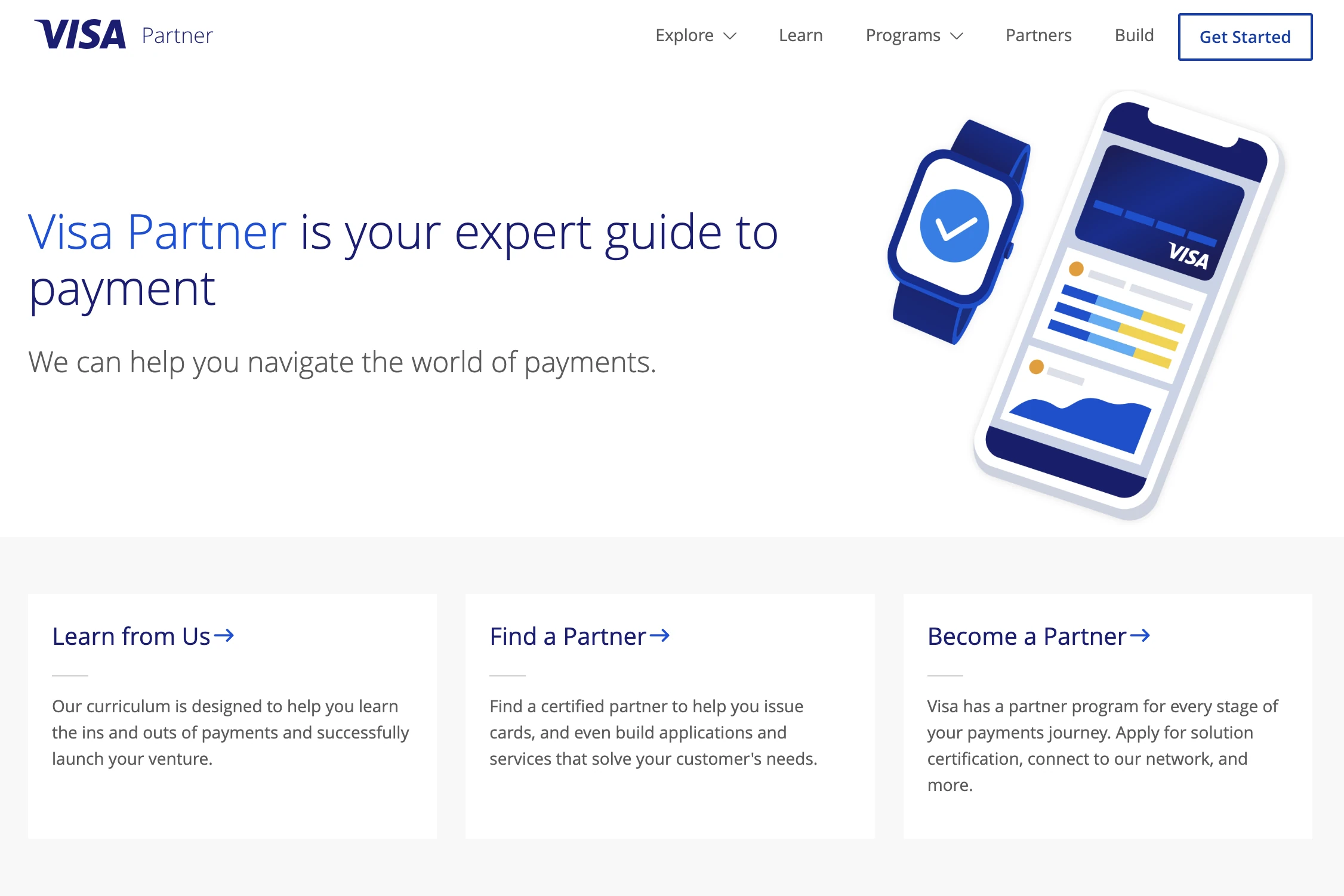
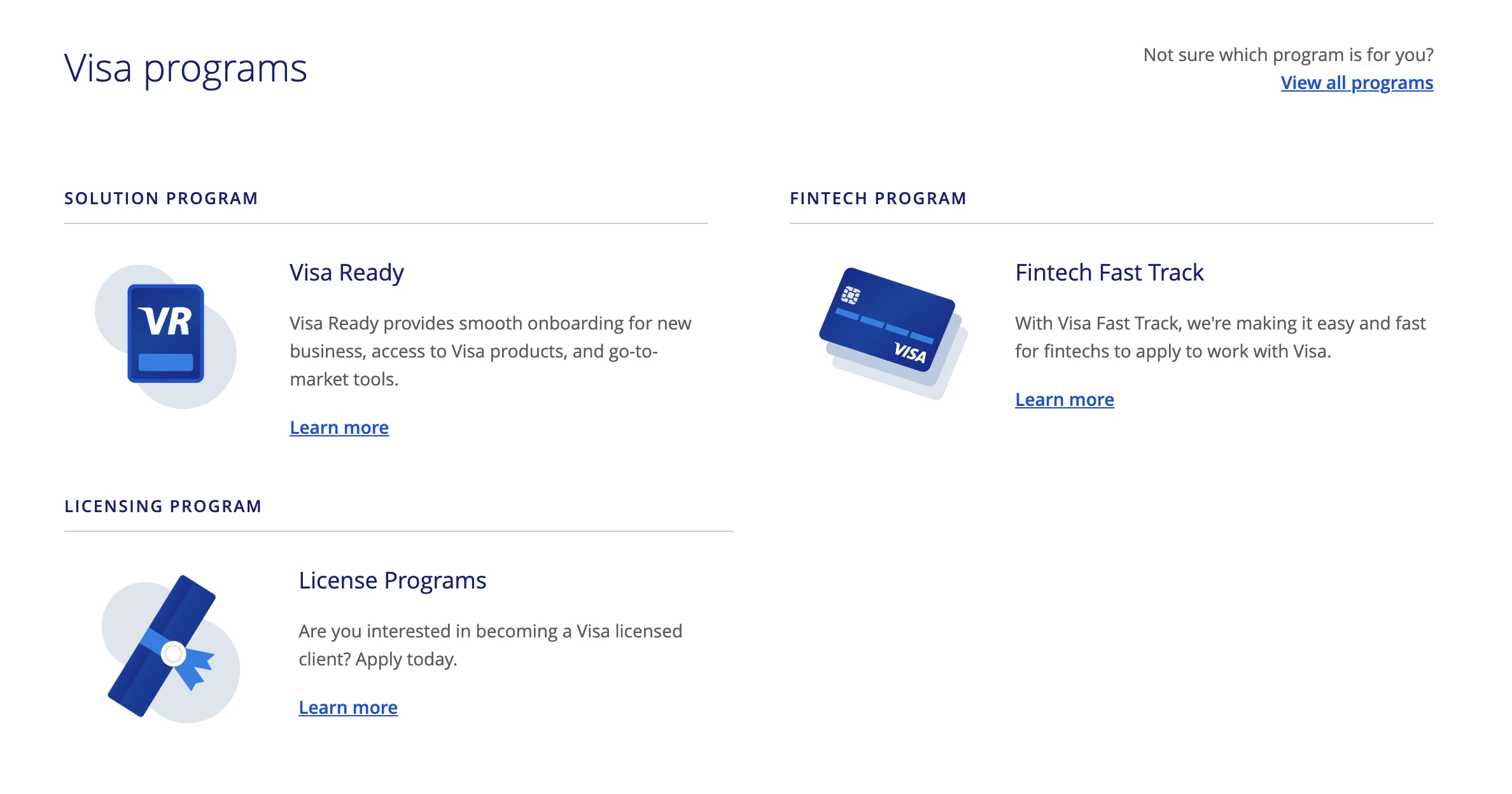
I worked directly with product to draw what they already had in mind: finding the right partner for a given capability, understanding Visa’s programs, and exploring what could be built on top of Visa’s platform.
Seeing it laid out is what surfaced the real decisions — which paths mattered, what belonged in a first release, where the edges were. Wireframes became the shared language that finally got engineering, product, and stakeholders aligned on scope.
Shipping a front door for the partner ecosystem
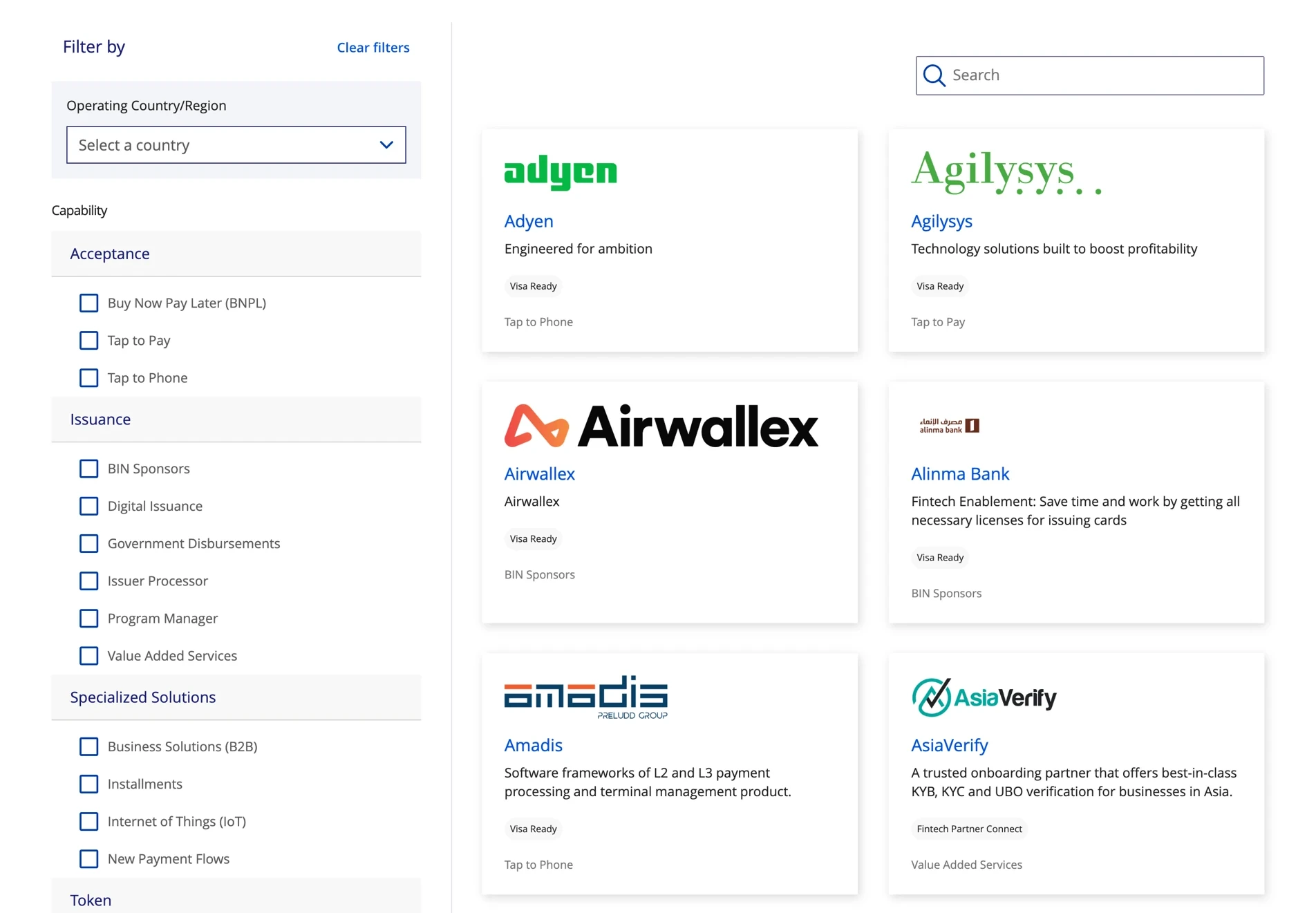
With alignment in hand, I carried the work through detailed design and into launch. The result is a self-serve platform that replaces manual, relationship-dependent processes with a digital experience partners can navigate on their own — discovering partners, exploring Visa’s capabilities, and finding the right program without waiting on a Visa rep to walk them through it.
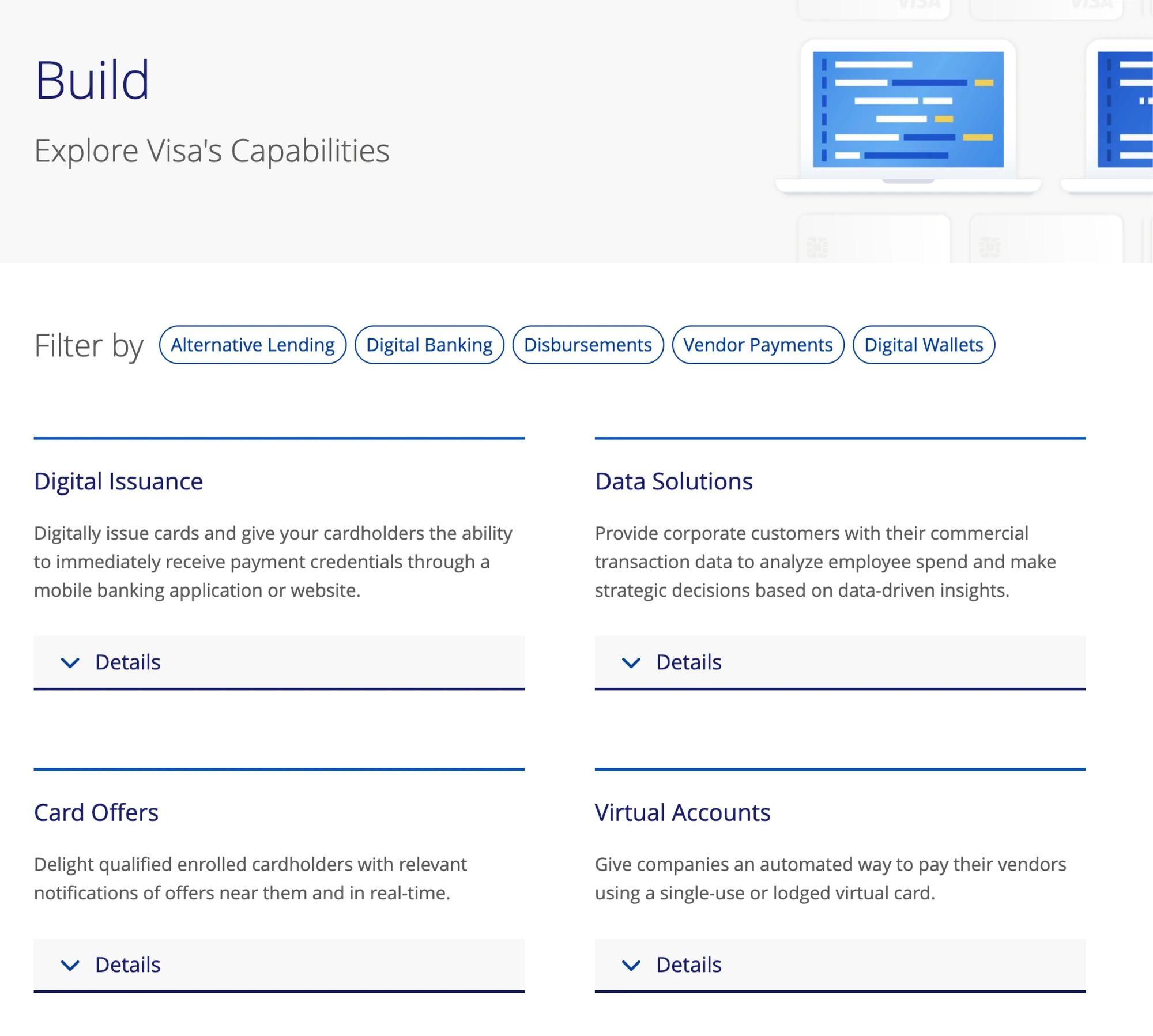
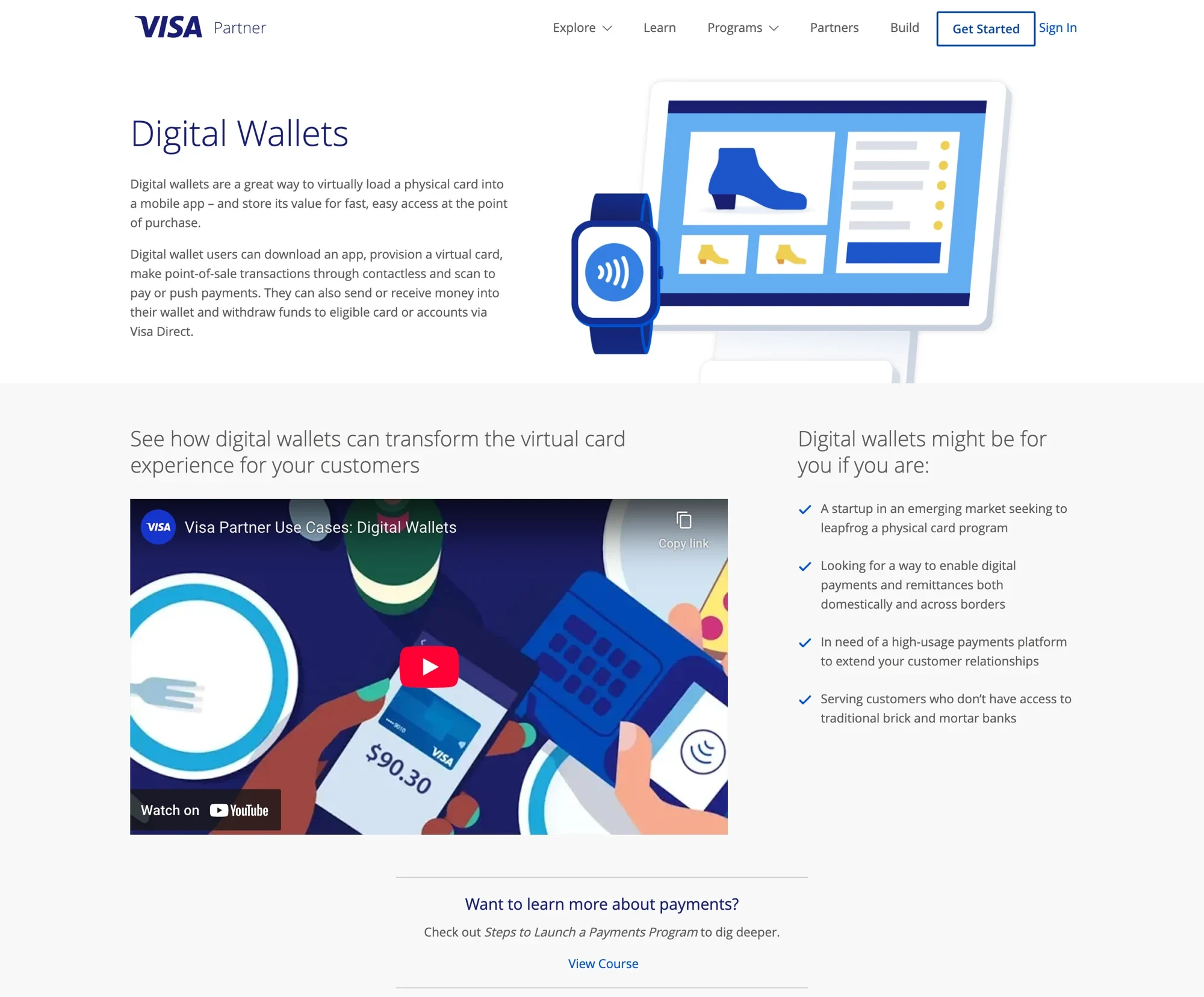
Each capability opens onto the partners and programs behind it, so a business arriving with an opportunity — digital wallets, say — lands on the solutions that serve it rather than on Visa’s internal product taxonomy.
Impact
Opening the ecosystem up this way was a meaningful step for Visa. Payments had changed around it — fintechs, wallet providers, and platforms expected to move at their own speed — while the way in still ran through Visa’s complex, varied processes. Putting the programs, the capabilities, and the partner directory somewhere public and self-serve meant meeting that expectation on the new terms rather than the old ones.
It was also a stepping stone. Self-service became something Visa clients could expect rather than negotiate for, and the platform made it easier for them to get on with what they actually came to do. That same problem — taking capability that only made sense from inside Visa and making it usable from outside — is the one I kept working on afterward.